Describe the visual idea
Start with the subject, environment, mood, movement, and intended visual direction. Specific language gives the system more useful creative boundaries.
Visual AI explained
What are neural frames? They are AI-generated visual moments arranged into a sequence so an idea can develop across time instead of appearing as one isolated image.
Keep exploring
These related guides explain where neural frames fit in online creation, music-led visuals, and broader AI video workflows.
See how browser-based workflows can turn visual ideas into an organized sequence.
Explore how generated visuals can be planned around rhythm, atmosphere, and a finished track.
Review practical examples of the kinds of scenes and visual directions this approach supports.
Learn how creators can shape generated sequences for channel videos and visual storytelling.
Set expectations
Neural frames are useful for visual development, but they are not a substitute for every part of production.
A character, object, or setting can change between moments if the visual direction is too loose.
WorkaroundUse a focused prompt, repeat important descriptors, and review the sequence before publishing.
Generated moments still need pacing, selection, transitions, sound, and a final narrative structure.
WorkaroundTreat the output as source material and assemble the strongest parts in an editor.
A short prompt may leave camera movement, subject behavior, lighting, and timing open to interpretation.
WorkaroundDescribe the subject, setting, motion, mood, and visual style in separate, concrete terms.
The creator remains responsible for permissions, likenesses, music, brands, and any other protected material.
WorkaroundUse assets and references you have the right to use, then check the result before release.
The basic workflow
The process is easier to understand as a short chain: describe an idea, generate visual moments, then shape those moments into a coherent result.
Start with the subject, environment, mood, movement, and intended visual direction. Specific language gives the system more useful creative boundaries.
The system interprets the direction and produces visual material that can be considered as individual frames or as parts of a developing sequence.
Review the strongest moments, refine the direction where needed, and organize the output around timing, story, music, or presentation.
A useful comparison
Both approaches describe visual change over time, but they begin from different creative inputs and require different kinds of control.
Neural frames
A written visual direction or reference-led idea
Traditional keyframes
Explicitly placed states on a timeline
Neural frames
Rapid exploration of atmosphere, subjects, and style
Traditional keyframes
Precise control over known positions and changes
Neural frames
Interpreted from the described scene and intent
Traditional keyframes
Defined directly through animation properties
Neural frames
Concept development and visual experimentation
Traditional keyframes
Refining a planned animation with exact timing
Neural frames
Keeping identity, composition, and details stable
Traditional keyframes
Managing many manual adjustments efficiently
Neural frames
Suggests possibilities from language and references
Traditional keyframes
Executes a defined design through deliberate settings
See the shift
The comparison is illustrative: a single visual direction can become a broader sequence when the subject, atmosphere, and progression are developed over time.

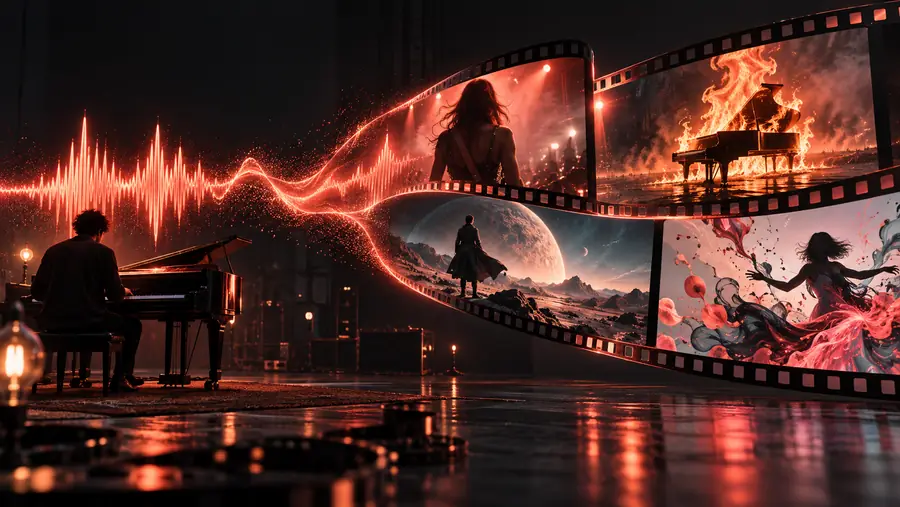
A concept becomes useful when it can evolve.
Who uses them
The appeal is not limited to one profession. Anyone who needs to explore visual ideas across time can use the approach as part of a wider creative workflow.
A performer wants visuals that reflect the mood and structure of a song.
They can develop atmosphere-led sequences that support a release, performance, or visualizer.
neural frames for musicA creator needs an unusual visual direction for a short video or channel segment.
They can explore multiple concepts before choosing a sequence to edit and publish.
neural frames for youtubeA designer is testing a mood, visual world, or motion concept before production.
They can use generated material as a visual reference for pitching and iteration.
neural frames onlineA small team needs to explore a scene or transition without building every asset first.
They can use early visual studies to clarify direction before committing production time.
neural frames video examplesStart with an idea
The clearest way to understand neural frames is to begin with one specific scene, describe how it should feel and move, and inspect the resulting direction. Keep the first idea focused so you can judge the visual logic rather than sorting through unnecessary detail.
Common questions
A concise answer to the central question and the practical details that follow from it.
Neural frames are AI-generated visual moments arranged or developed as a sequence over time. Instead of treating an image as the complete result, the process uses visual direction to explore how a subject, setting, or mood can evolve.
They are related to the idea of frames in video, but the phrase usually describes frames or visual moments created with an AI-assisted process. The important distinction is how the material is produced and directed, not simply that it appears in a timeline.
They can support concept development, music-led visuals, short-form video ideas, visual references, and early scene exploration. They are most useful when treated as creative material that still needs selection, editing, and review.
Not necessarily. A generated sequence may provide useful visual material, but a finished video still depends on continuity checks, pacing, sound, transitions, rights review, and the creator's editorial choices.